AFS' Position on the Digital Fitness Check

Startups and scale-ups are at the heart of Europe’s digital innovation, yet the regulatory environment they operate in is becoming increasingly complex.
Over the past few years, multiple major EU digital rules, including the AI Act, Data Act, Digital Services Act, Digital Markets Act, and NIS2 Directive, have created multiple layers of obligations for companies, often overlapping and sometimes unclear. For startups, which operate with small teams and tight resources, these simultaneous requirements can slow growth and make cross-border expansion more difficult.
The challenge is not the ambition of these rules. Trustworthy AI, data accessibility, platform accountability, fair digital markets, and cybersecurity are essential goals. The challenge arises from the way different rules interact in practice. Startups are trying to develop products, attract investment, hire talent, and scale internationally, all while interpreting multiple evolving regulations. The result can be confusion, delayed launches, and unintended operational risks.
A central concern is that startups are often treated the same as SMEs in regulatory assessments. While size-based definitions capture some differences, they overlook the realities of high-growth companies: rapid scaling, cross-border operations, high reinvestment in growth, and limited internal compliance teams. Recognising startups and scale-ups as a distinct category is crucial to ensure regulations are practical and proportionate.
Allied For Startups’ contribution to the Digital Fitness Check highlighted several areas for improvement:
- Consolidate existing rules first: The EU should prioritise fully implementing and harmonising current legislation before adding new horizontal frameworks. This would reduce overlaps, divergent interpretations, and unnecessary administrative burdens.
- Evaluate real-world impacts dynamically: Legislative changes during negotiation phases should trigger updated assessments to reflect the actual costs and operational implications for startups.
- Assess cumulative effects on innovation: Policymakers should examine how multiple regulations interact and ensure that scaling companies are not inadvertently discouraged from expanding or investing in new technologies.
- Protect sustainable business models under data and AI rules: Implementation of the Data Act, AI Act, and related frameworks must consider the operational realities of software and infrastructure scale-ups, ensuring obligations support growth rather than undermine long-term contracts and financial viability.
A coherent regulatory framework does more than reduce friction. It encourages experimentation, attracts investment, and strengthens Europe’s digital ecosystem. Startups that can navigate rules with clarity are more likely to innovate, create jobs, and compete on a global scale.
By simplifying compliance, clarifying obligations, and designing rules with the realities of high-growth companies in mind, Europe can maintain a regulatory environment where startups are empowered to thrive.
Keeping up with the change
Stay up to date with the latest news, insights, and actions from allied for startups. Discover how we’re working to amplify voices, shape policies, and create opportunities for startups worldwide.
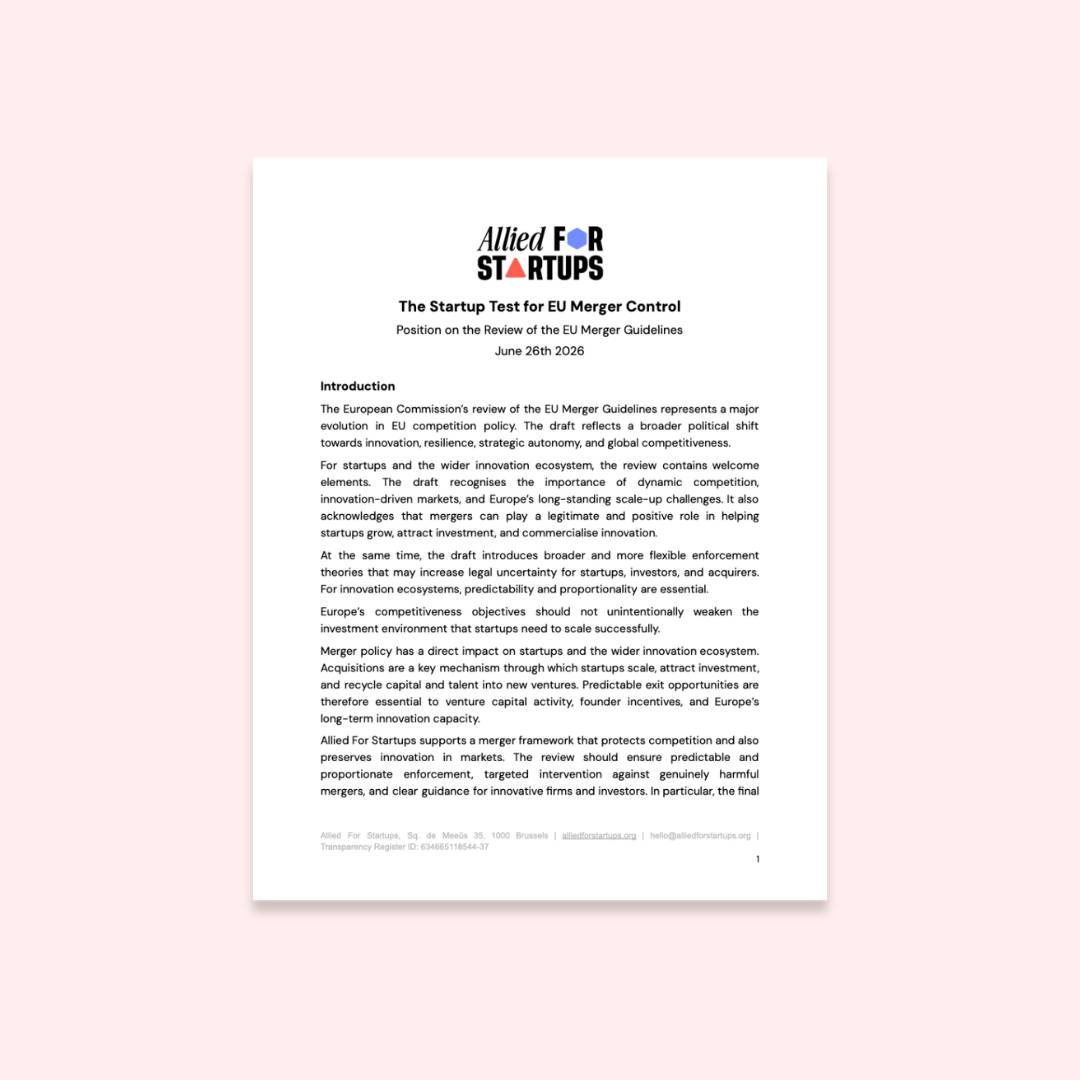
AFS’ Position on the Review of the EU Merger Guidelines
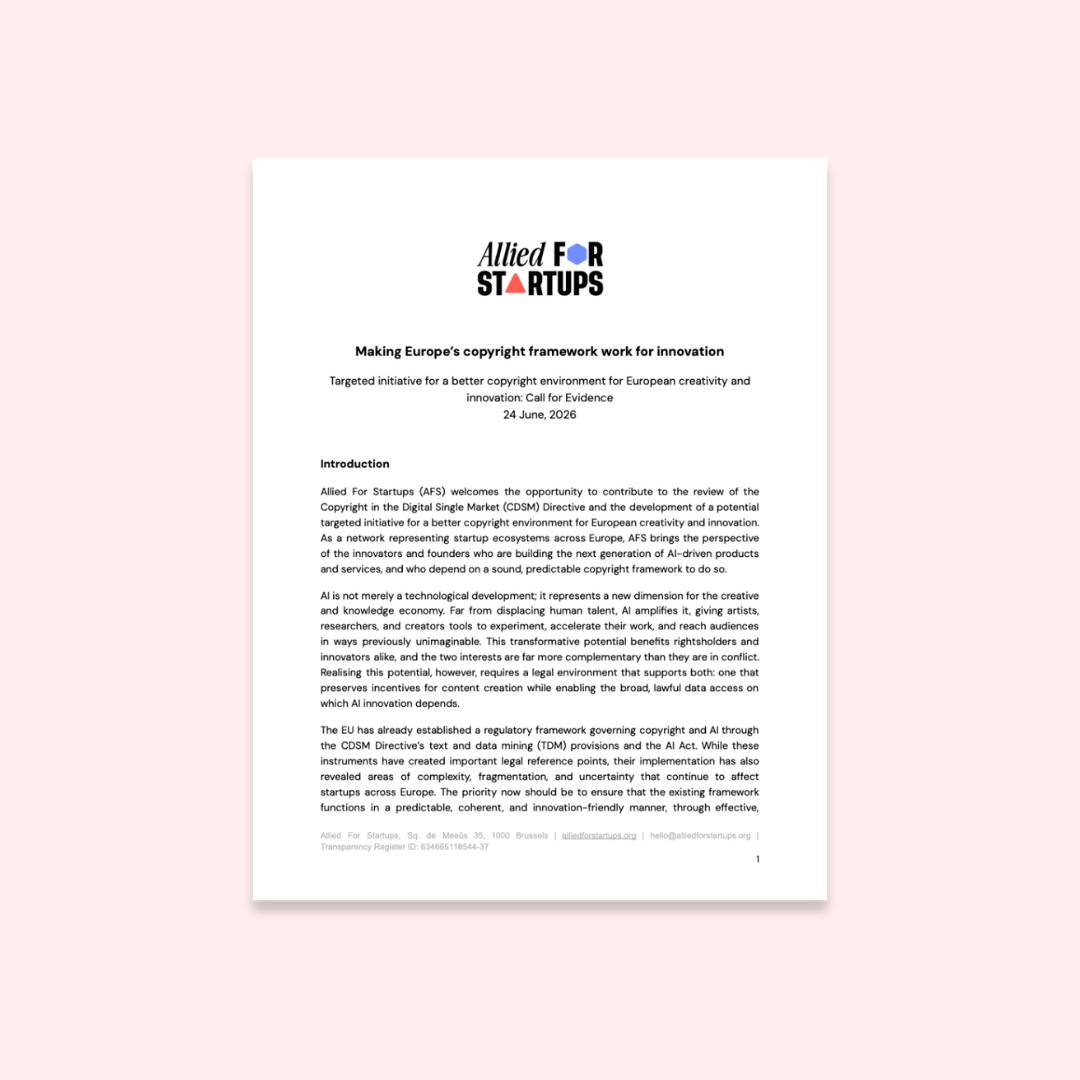
AFS’ Position on the Directive on Copyright in the Digital Single Market
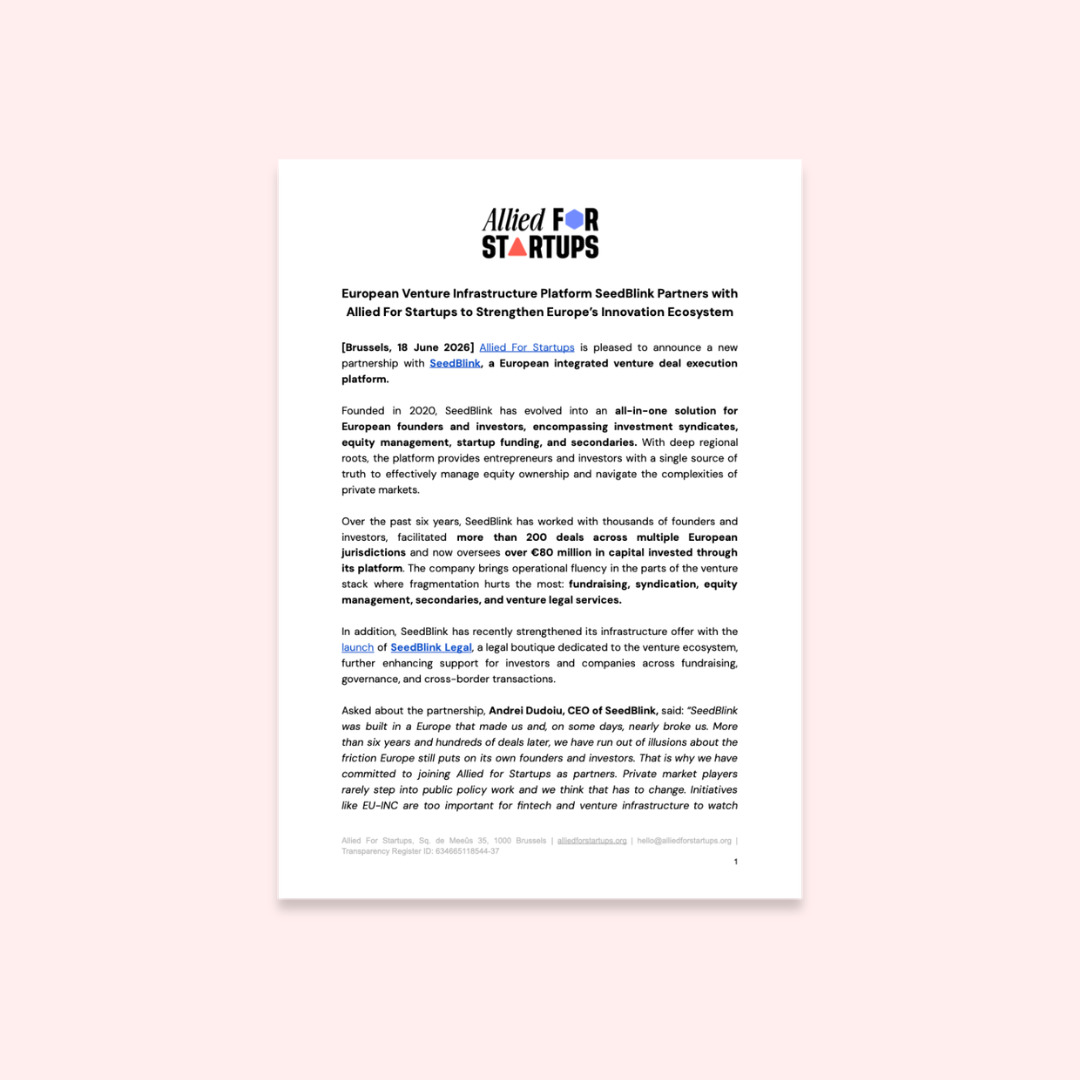
European Venture Infrastructure Platform SeedBlink Partners with Allied For Startups to Strengthen Europe’s Innovation Ecosystem
Startup Innovation
in Action
Join the conversation where policy meets innovation. Allied for Startups brings together entrepreneurs, policymakers, and industry leaders to tackle the biggest challenges and opportunities facing startups today.
Stay Informed
Stay Ahead
Discover how we change the game. Our news and publications offer an inside look at the policy work driving innovation and change in the startup ecosystem.