AFS' Position on the Digital Networks Act
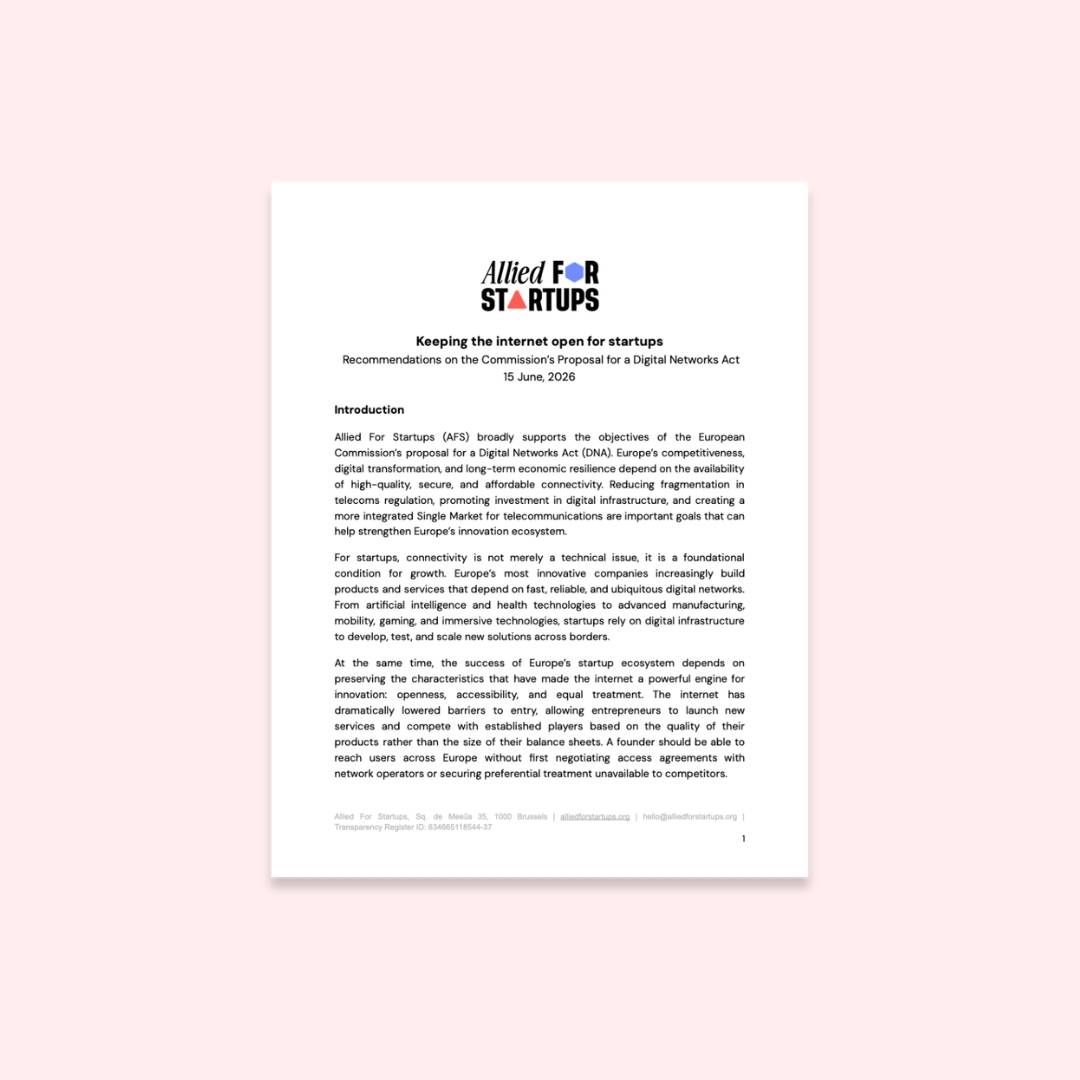
Startups are not just users of the internet, they are built on it. From the moment a founder writes their first line of code to the day they scale across borders, the openness and accessibility of digital networks is a foundational condition for growth. Europe’s most innovative companies, in AI, health tech, mobility, gaming, and beyond, depend on fast, affordable, and non-discriminatory connectivity to develop, test, and reach users.
Allied For Startups broadly welcomes the objectives behind the European Commission’s proposal for a Digital Networks Act. Stronger investment in digital infrastructure, reduced regulatory fragmentation through a single authorisation regime, and better spectrum coordination are all positive steps that can help Europe’s startup ecosystem thrive. Most importantly, the explicit codification of net neutrality principles in Article 93 provides the legal certainty that startups need. An internet where all services reach users on equal terms is not a technical detail, it is the reason a two-person team anywhere in Europe can compete with a global incumbent.
But the proposal also raises concerns that deserve attention.
The framework for specialised services under Articles 93(5) and 93(6) creates uncertainty that could chill innovation and investment. When the practical rules governing differentiated service delivery are left to future implementing acts rather than defined in the legislative text, founders cannot reliably assess future market conditions. Investors cannot model whether tomorrow’s infrastructure landscape will look like today’s. Large incumbents, with legal teams and commercial relationships already in place, can absorb that uncertainty. Early-stage startups cannot.
The proposal also introduces a new cooperation and voluntary conciliation mechanism between network operators and online service providers. At its core, this is a threat to the open internet. A framework that pushes online services into commercial negotiations with infrastructure providers risks turning net neutrality from a legal guarantee into a bargaining chip. The internet has worked for innovators precisely because reaching users has never depended on striking deals with the pipes that carry traffic. Institutionalising that dynamic, even under a voluntary label, undermines the very principle the DNA elsewhere seeks to protect. AFS recommends removing Articles 191 to 193 entirely, and if the mechanism is retained, ensuring its voluntary nature is protected without exception.
A world-class connectivity framework and a genuinely open internet are not in tension, they are mutually reinforcing. Europe can have both. But getting the balance right requires strong, clear safeguards on net neutrality, tighter rules on specialised services written into the law itself, and a firm commitment to avoiding mechanisms that shift market access from a technical question to a bargaining one. That is the internet that gives the next generation of European startups a fair shot.
Keeping up with the change
Stay up to date with the latest news, insights, and actions from allied for startups. Discover how we’re working to amplify voices, shape policies, and create opportunities for startups worldwide.
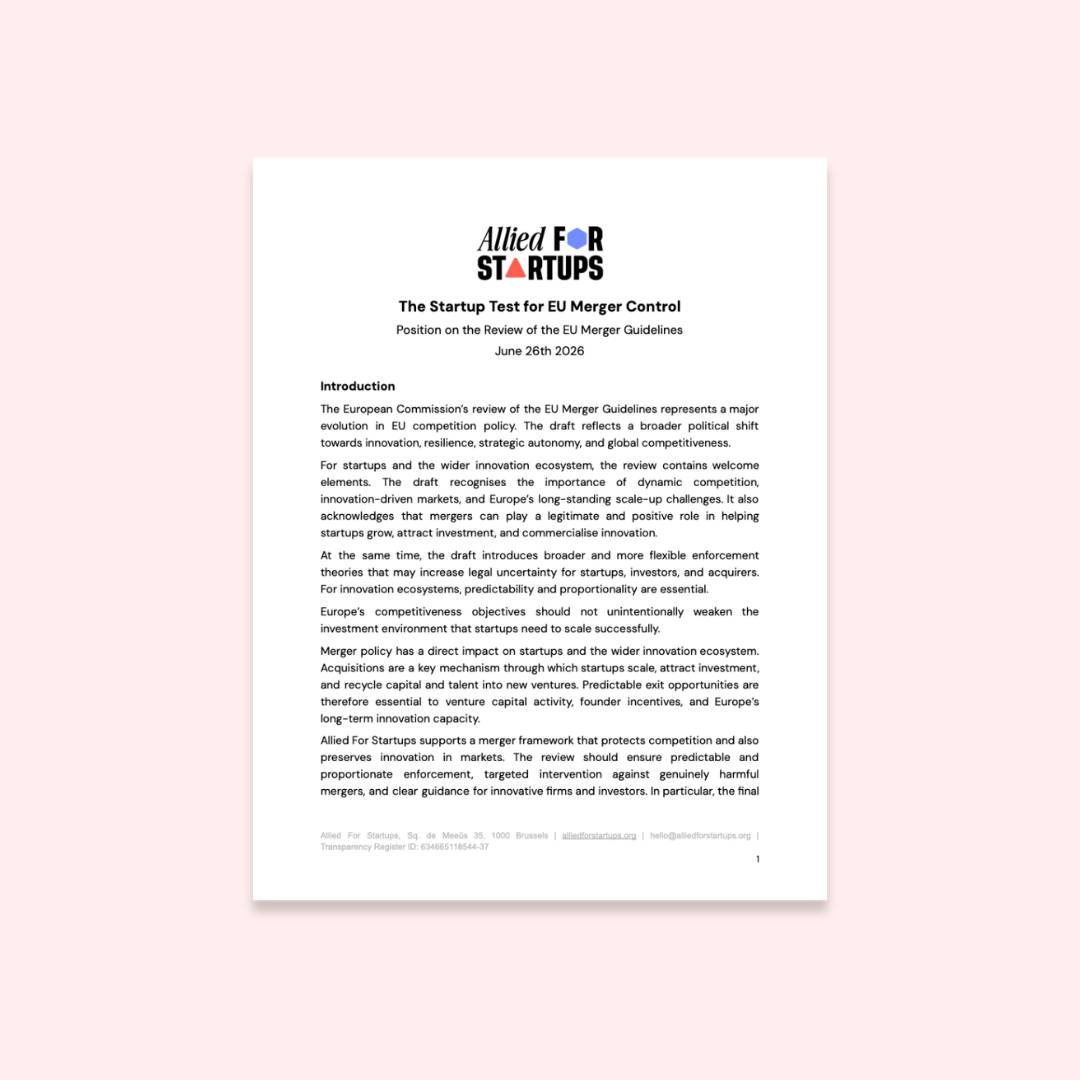
AFS’ Position on the Review of the EU Merger Guidelines
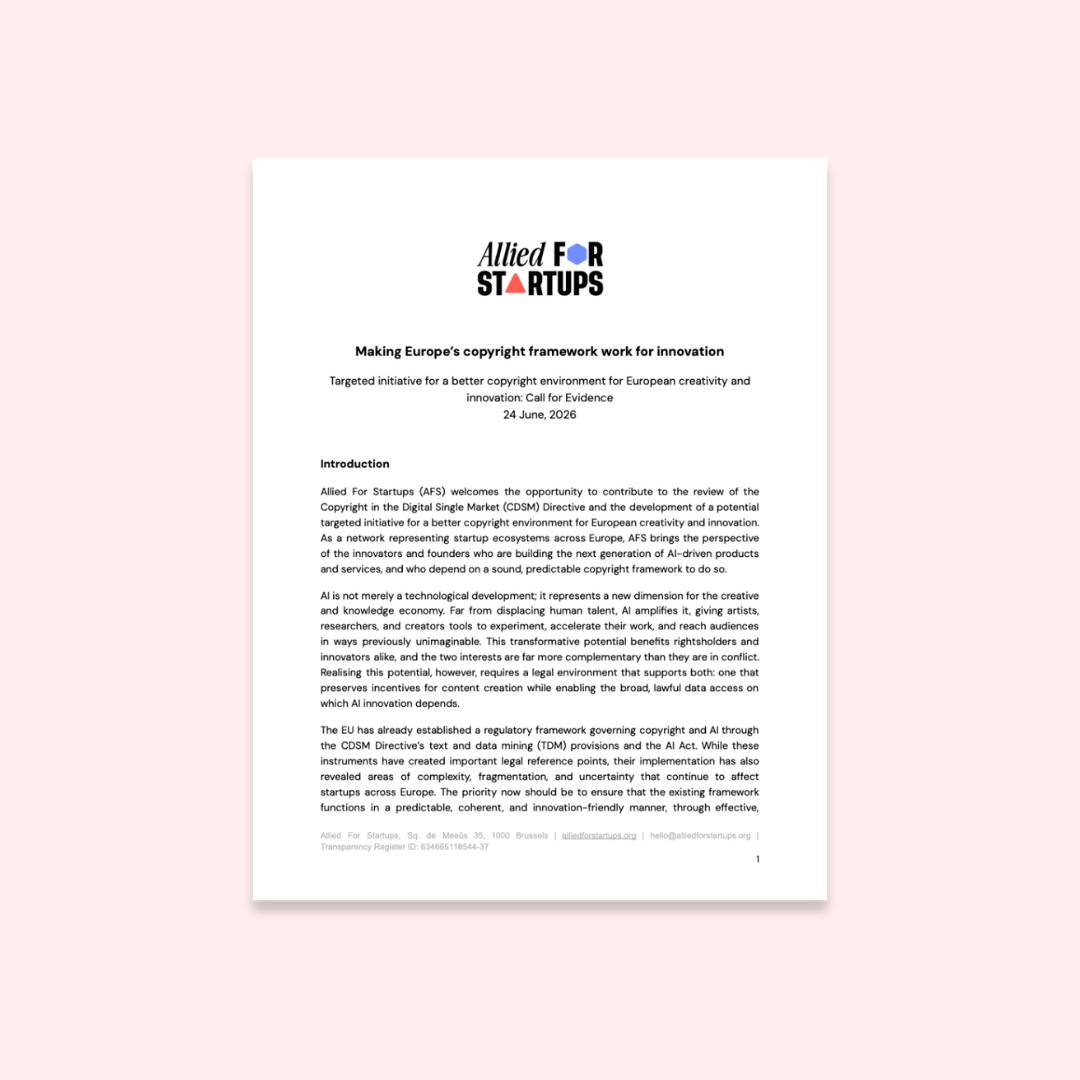
AFS’ Position on the Directive on Copyright in the Digital Single Market
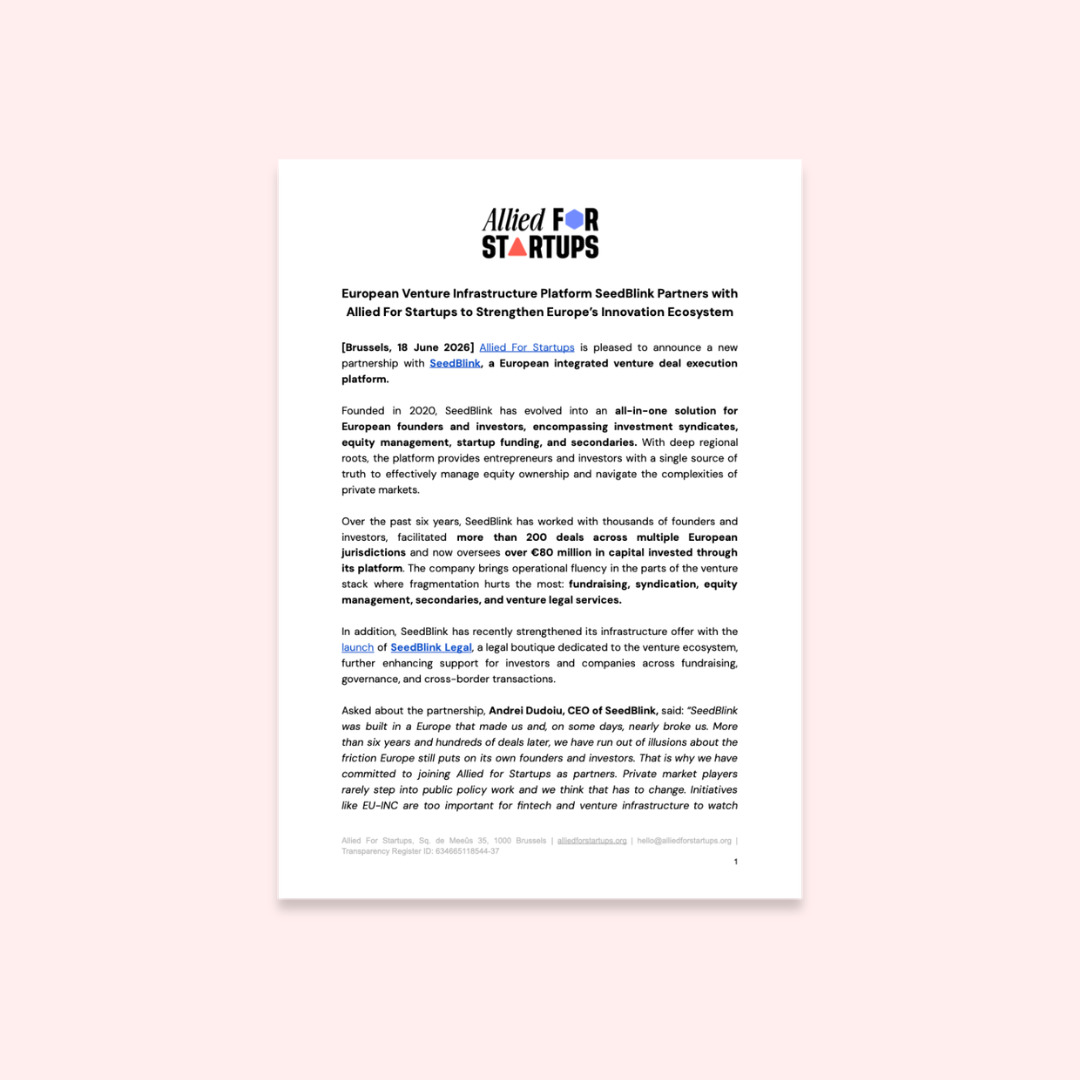
European Venture Infrastructure Platform SeedBlink Partners with Allied For Startups to Strengthen Europe’s Innovation Ecosystem
Startup Innovation
in Action
Join the conversation where policy meets innovation. Allied for Startups brings together entrepreneurs, policymakers, and industry leaders to tackle the biggest challenges and opportunities facing startups today.
Stay Informed
Stay Ahead
Discover how we change the game. Our news and publications offer an inside look at the policy work driving innovation and change in the startup ecosystem.