AFS' Remarks on the INI Report on Copyright and Generative AI
The European Parliament has adopted its own-initiative report on copyright and generative AI. It was approved with 460 votes in favour, 71 against and 88 abstentions.
The vote reflects growing attention in Europe to the relationship between copyright and AI development. As generative AI technologies advance rapidly, policymakers are searching for ways to protect creators while ensuring that innovation can continue. That balance will be decisive for Europe’s technological future.
AI and Europe’s competitiveness
The debate comes at a moment when Europe is reassessing its global competitiveness. The Draghi report on EU competitiveness warned that without reforms, Europe risks falling behind in innovation and productivity. At the same time, it highlighted artificial intelligence as an opportunity for Europe to regain momentum.
Today, that opportunity is no longer hypothetical. The AI revolution is already underway.
Artificial intelligence has the potential to accelerate scientific discovery, support creative industries and drive productivity across the economy. It is capable of transforming fields ranging from medicine and engineering to the arts and cultural sectors.
For AI to deliver these benefits, however, systems must be able to learn from existing knowledge. AI development depends on access to data, scientific literature, cultural works and other forms of information that allow models to recognise patterns and generate new insights.
Ensuring that AI systems can learn from Europe’s knowledge base is essential for innovation. Artificial intelligence offers enormous potential for Europe: it can strengthen scientific discovery, expand creative expression and contribute to economic growth. But this potential will only materialise if Europe maintains an environment where researchers and innovators can build upon existing knowledge.
The challenge for policymakers, therefore, is to strike a balanced framework that protects creators while preserving the conditions necessary for innovation and scientific progress, and ultimately supports Europe’s long-term competitiveness.
What the report gets right
The Parliament’s report contains several constructive elements.
It acknowledges that Text and Data Mining (TDM) exceptions under the EU Copyright Directive apply to AI training, an important clarification for researchers and developers. It also avoids proposals that would directly restrict scientific research or non-commercial innovation.
In addition, amendments adopted during the legislative process ensure that European AI developers, including startups, together with researchers and libraries are considered when evaluating the implementation of the Copyright Directive.
These elements reflect concerns raised by research organisations, libraries and innovation stakeholders across Europe. They help preserve an important legal foundation for research and AI development.
Risks for research and innovation
Despite these improvements, the report still raises significant concerns.
The EU has already adopted major legislation addressing artificial intelligence. The AI Act was recently finalised and is about to begin implementation, introducing transparency requirements and other obligations for AI systems.
At the same time, the EU Copyright Directive already regulates the relationship between copyright and AI training through the TDM framework.
Against this background, the Parliament’s report risks adding another layer of regulatory expectations before policymakers have had time to assess how the current framework works in practice.
Ideas discussed in the report, such as introducing licensing or remuneration requirements for the use of works in AI training or establishing a rebuttable presumption of use, could create significant legal uncertainty.
Such measures would likely have a disproportionate impact on European researchers, startups and smaller AI developers, who often lack the legal resources available to large technology companies. Increased uncertainty could discourage the development of European AI models and push innovation elsewhere.
This would run counter to the European Commission’s broader objectives of simplification, competitiveness and strengthening Europe’s innovation ecosystem.
The importance of the Text and Data Mining framework
The EU’s existing Text and Data Mining framework is a cornerstone of Europe’s research and innovation environment.
Articles 3 and 4 of the Copyright Directive enable researchers, developers and innovators to analyse large datasets in order to extract knowledge and insights. These provisions are widely used in scientific research, digital humanities, artificial intelligence development and other emerging technologies.
Weakening or undermining this framework would not only affect AI companies. It would affect universities, research institutes, libraries and startups that rely on data analysis to advance knowledge.
Maintaining a robust and predictable TDM regime is therefore essential if Europe wants to remain competitive in AI development.
Looking ahead
The European Parliament’s vote shows that the debate on copyright and AI is far from settled.
Allied For Startups will continue to work with EU institutions to ensure that Europe’s copyright framework supports both creativity and innovation.
If Europe wants to lead in artificial intelligence, it must ensure that its rules enable knowledge to circulate, innovation to flourish and new technologies to develop within Europe’s research and entrepreneurial ecosystems.
Keeping up with the change
Stay up to date with the latest news, insights, and actions from allied for startups. Discover how we’re working to amplify voices, shape policies, and create opportunities for startups worldwide.
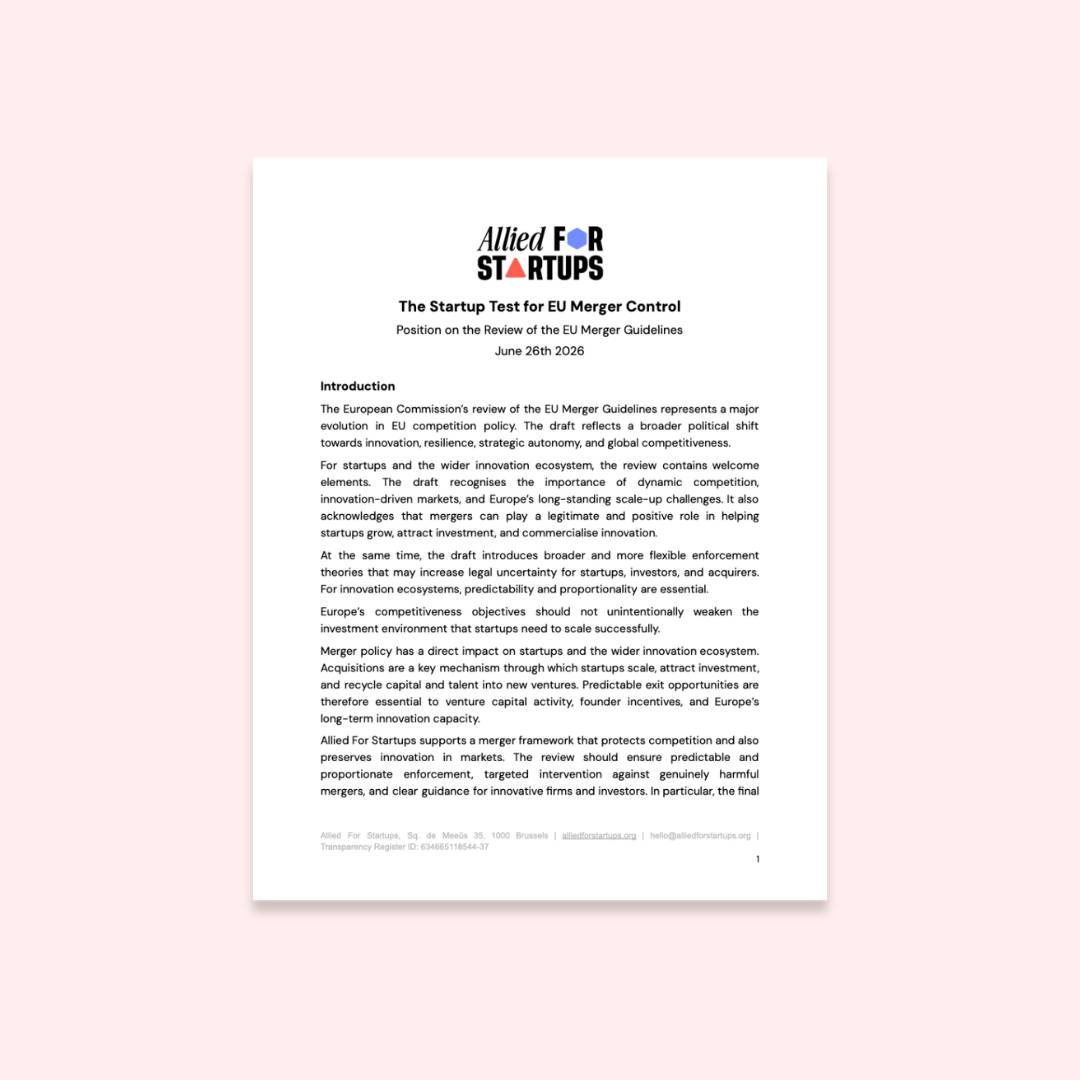
AFS’ Position on the Review of the EU Merger Guidelines
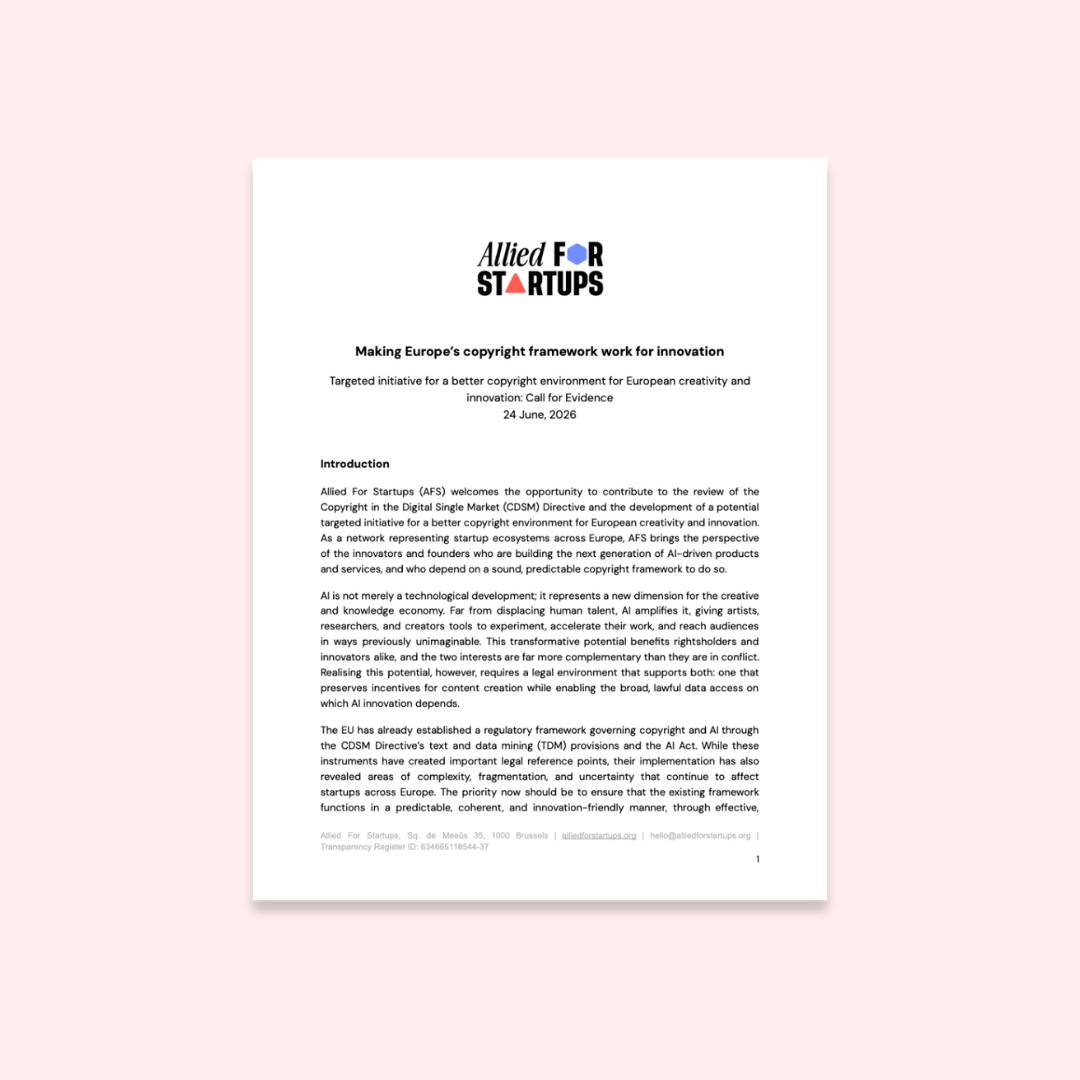
AFS’ Position on the Directive on Copyright in the Digital Single Market
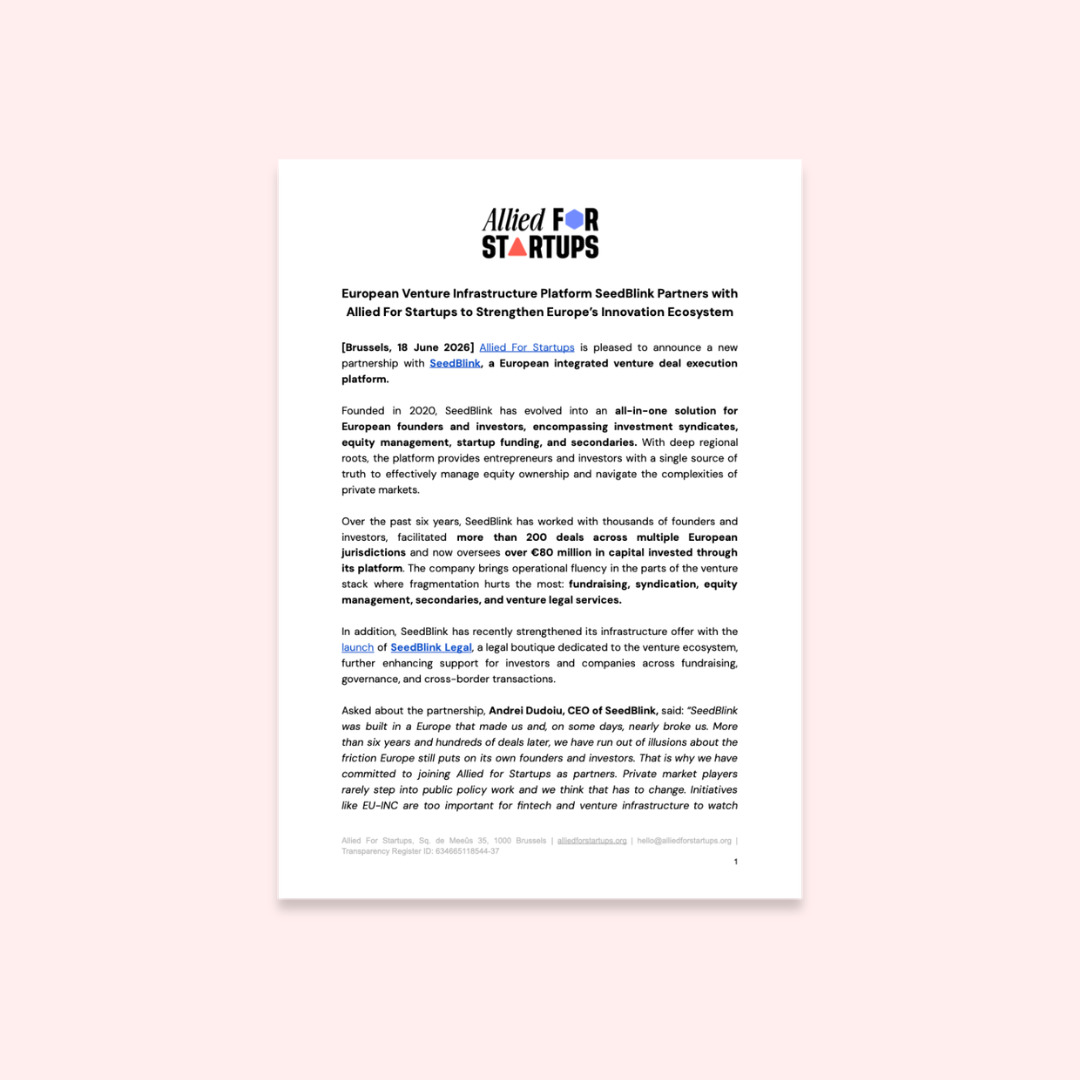
European Venture Infrastructure Platform SeedBlink Partners with Allied For Startups to Strengthen Europe’s Innovation Ecosystem
Startup Innovation
in Action
Join the conversation where policy meets innovation. Allied for Startups brings together entrepreneurs, policymakers, and industry leaders to tackle the biggest challenges and opportunities facing startups today.
Stay Informed
Stay Ahead
Discover how we change the game. Our news and publications offer an inside look at the policy work driving innovation and change in the startup ecosystem.