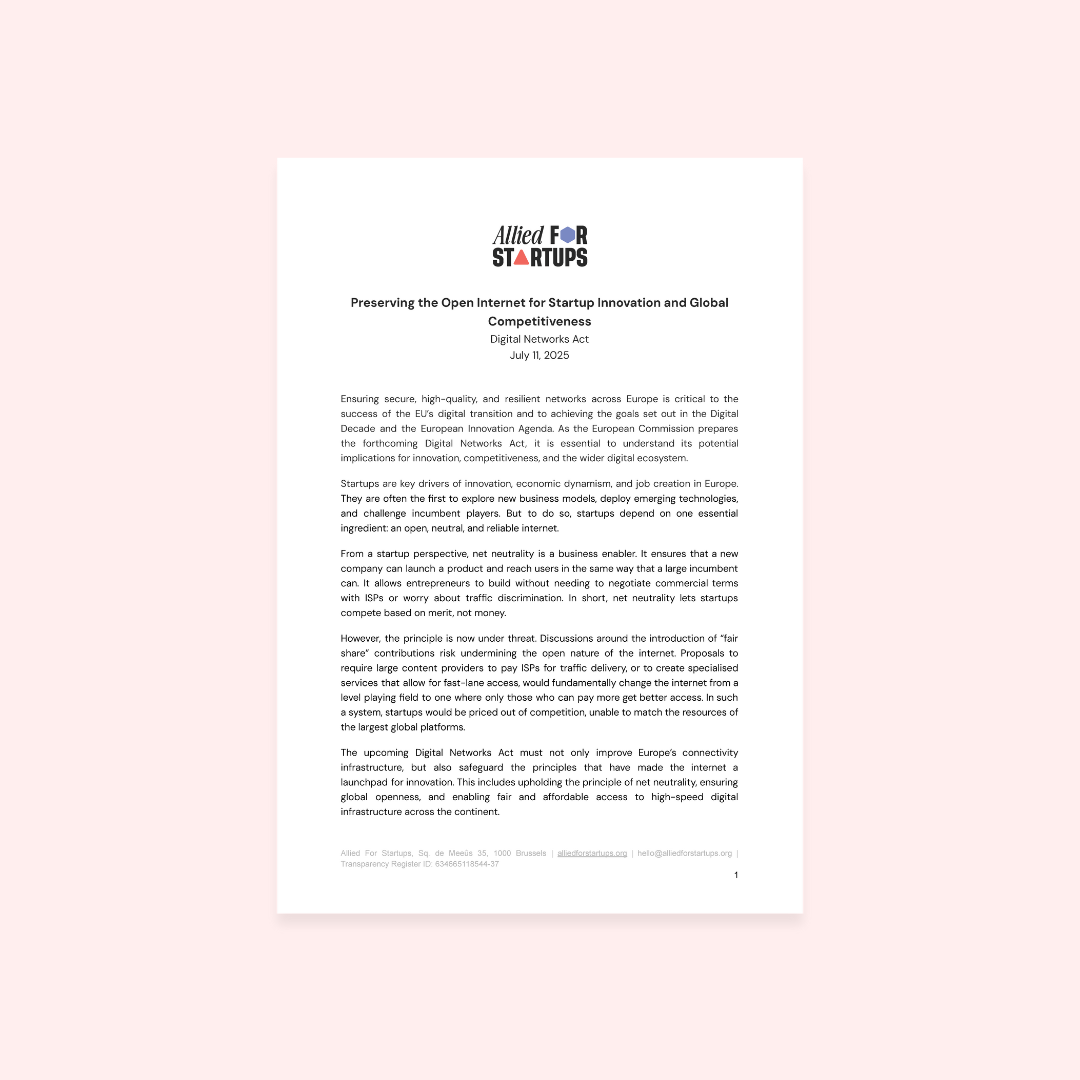
Allied for Startups’ Position on the Digital Networks Act
Ensuring secure, high-quality, and resilient networks across Europe is fundamental to the success of the EU’s digital transition and to achieving the goals set out in the Digital Decade and the European Innovation Agenda. As the European Commission prepares the forthcoming Digital Networks Act, a proposal that will reshape the EU’s connectivity framework, it is essential to understand its potential implications for innovation, competitiveness, and the wider digital ecosystem.
What is the Digital Networks Act ?
The Digital Networks Act is an upcoming legislative proposal from the European Commission, identified as a strategic priority in the 2025 Competitiveness Compass. Its core objective is to harmonise the EU connectivity sector by addressing delays, inconsistencies, and fragmentation in the current regulatory framework. It aims to remove barriers to cross-border operations, stimulate innovation and investment in very high-capacity and cloud-based networks, and strengthen coordination on spectrum assignment. It also seeks to modernise and streamline the regulatory landscape to keep pace with technological developments, ensure equitable access to the satellite market, and foster more effective cooperation across the digital infrastructure ecosystem.
To achieve these goals, the Commission plans to cut red tape, streamline authorisation regimes, and consolidate existing legislation. It will also improve spectrum governance, promote fair and efficient use of satellite and terrestrial networks, and support balanced market conditions through clearer rules and targeted access measures such as an accelerated copper switch-off.
What AFS supports :
Startups thrive in an open, fair, and predictable digital environment. The Digital Networks Act must not undermine these foundations.
- Net neutrality is essential for startup growth and innovation. It ensures all internet traffic is treated equally, allowing startups to compete on a level playing field. Weakening it would create a two-tier internet, favour dominant players, and raise barriers for emerging companies.
- New network fees or traffic-based obligations would deter investment and limit scale. Such models create regulatory uncertainty and set a harmful precedent that could extend to startups.
- Startups need open, global, and interoperable connectivity. Fragmentation through region-specific fees or traffic management would make it harder for startups to grow across borders and reach users efficiently.
- Europe must protect digital openness. Undermining net neutrality or reopening ePrivacy would increase complexity and discourage innovation, making the EU less competitive for tech talent and investment.
Keeping up with the change
Stay up to date with the latest news, insights, and actions from allied for startups. Discover how we’re working to amplify voices, shape policies, and create opportunities for startups worldwide.
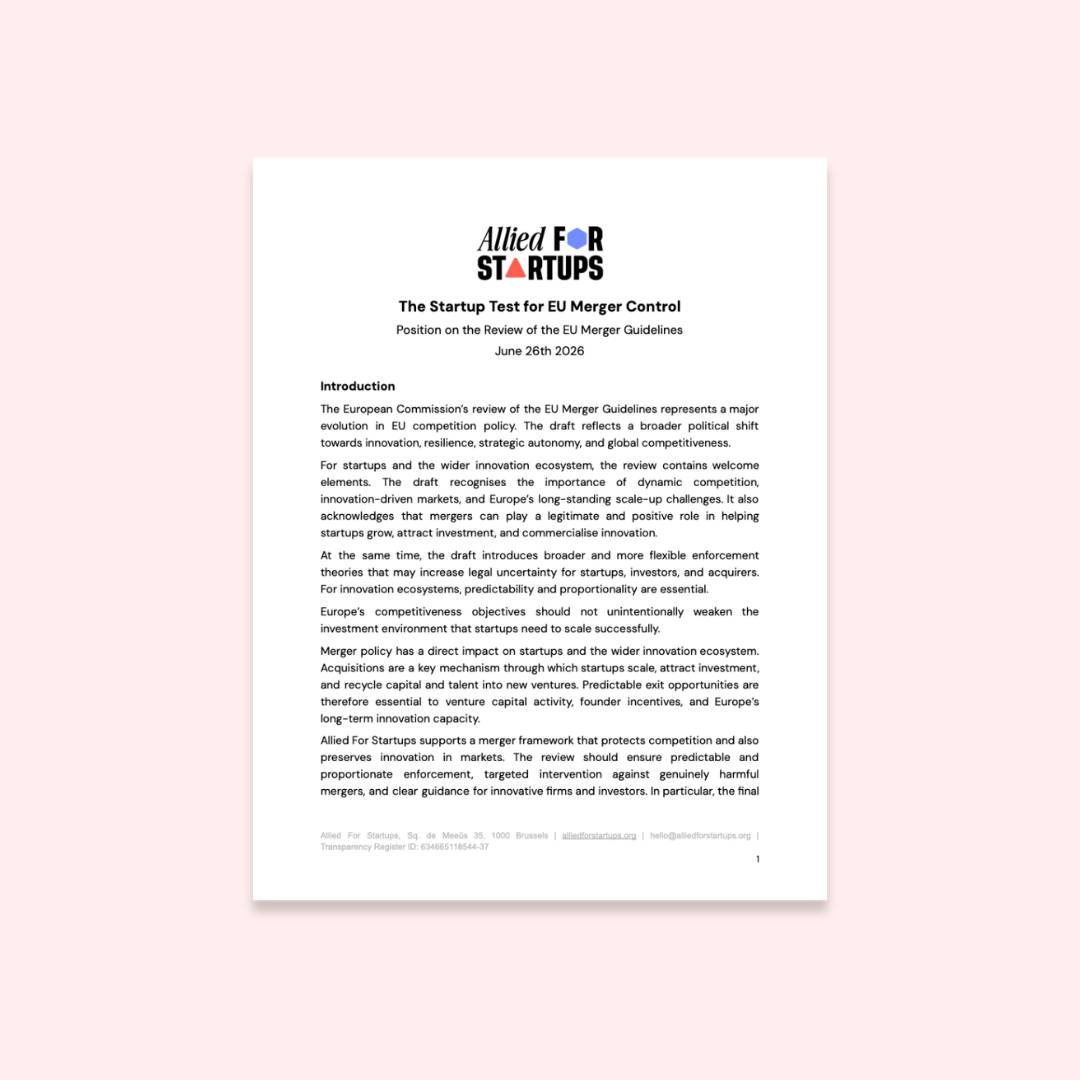
AFS’ Position on the Review of the EU Merger Guidelines
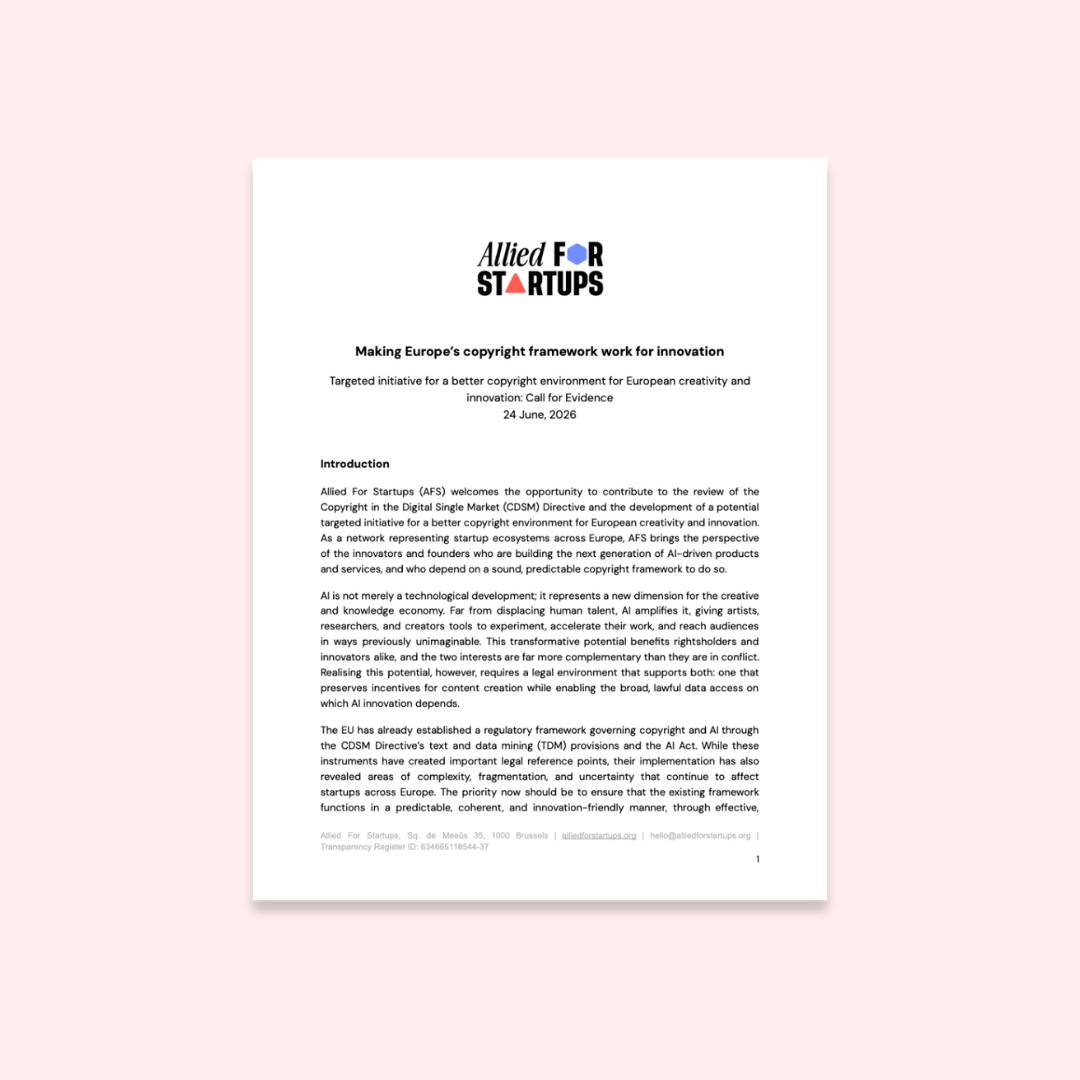
AFS’ Position on the Directive on Copyright in the Digital Single Market
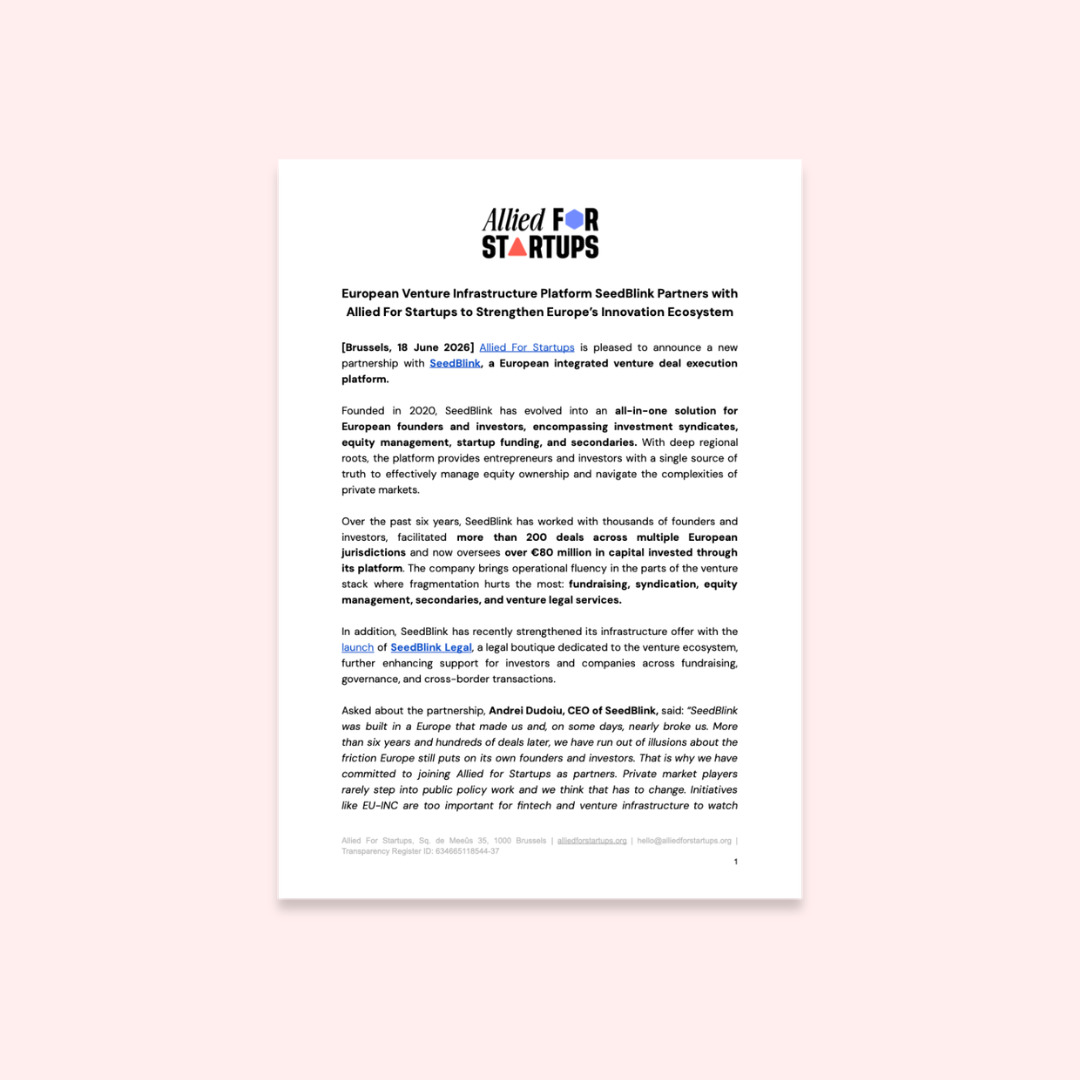
European Venture Infrastructure Platform SeedBlink Partners with Allied For Startups to Strengthen Europe’s Innovation Ecosystem
Startup Innovation
in Action
Join the conversation where policy meets innovation. Allied for Startups brings together entrepreneurs, policymakers, and industry leaders to tackle the biggest challenges and opportunities facing startups today.
Stay Informed
Stay Ahead
Discover how we change the game. Our news and publications offer an inside look at the policy work driving innovation and change in the startup ecosystem.