Allied For Startups' Position on the European Innovation Act

Europe has world-class research and entrepreneurial talent, yet many breakthrough ideas fail to become competitive products, companies, or jobs due to fragmentation, regulatory burdens, and scaling barriers.
The European Innovation Act (EIA) offers an opportunity to address these structural barriers and empower startups to transform Europe’s scientific excellence into global leadership.
Problem diagnosis aligned with the EIA scope
The Commission rightly identifies the following barriers:
- Regulatory fragmentation. Startups often face 27 different regimes when expanding across borders.
- Innovation-unfriendly rules. Legislation is not consistently tested for its impact on startups, leading to disproportionate burdens.
- Limited sandboxing. Opportunities to test under real-world conditions remain scarce and lack cross-border recognition.
- Finance gaps. Startups struggle to raise growth capital and cannot use intellectual property as collateral in most cases.
- R&I commercialisation. Knowledge produced with public funding is too often trapped in labs, not markets.
- Infrastructures. Small businesses cannot afford or access critical research equipment.
- Procurement. Public demand for innovation is underused, depriving startups of first customers.
- Talent. Stock-option regimes are fragmented, reducing Europe’s ability to compete for global talent.
- Coordination. Innovation policies across EU and Member States remain unaligned, creating inefficiencies and overlaps.
AFS Recommendations
Allied For Startups (AFS) proposes 10 measures to make the EIA the cornerstone of a Single Market for innovation:
- Common EU definitions of startups, scale-ups and innovative companies.
- An innovation-friendly rulebook with mandatory innovation tests.
- EU-wide mutual-recognition sandboxes and a regulatory ladder.
- Unlock IPR-backed fi nance with standardised valuation and guarantees.
- Accelerate commercialisation of public R&I with model IP terms and fast-track certification.
- Guarantee fair access to research infrastructures with transparent pricing and vouchers.
- Make public procurement innovation-ready with first-purchase facilities and playbooks.
- Modernise talent tools with an EU baseline for stock options and mobility reforms.
- Coordinate innovation policies with a joint EU–Member State Innovation Board and scoreboards.
- Measure what matters with annual KPIs and transparent evaluations.
Conclusion
The EIA can be a turning point, enabling startups to thrive because of the Single Market – not in spite of it. By addressing fragmentation, scaling barriers, and financing gaps, the EIA can unlock Europe’s full innovation potential. AFS stands ready to collaborate with the European Commission, Member States, and stakeholders to translate these recommendations into practice.
Keeping up with the change
Stay up to date with the latest news, insights, and actions from allied for startups. Discover how we’re working to amplify voices, shape policies, and create opportunities for startups worldwide.
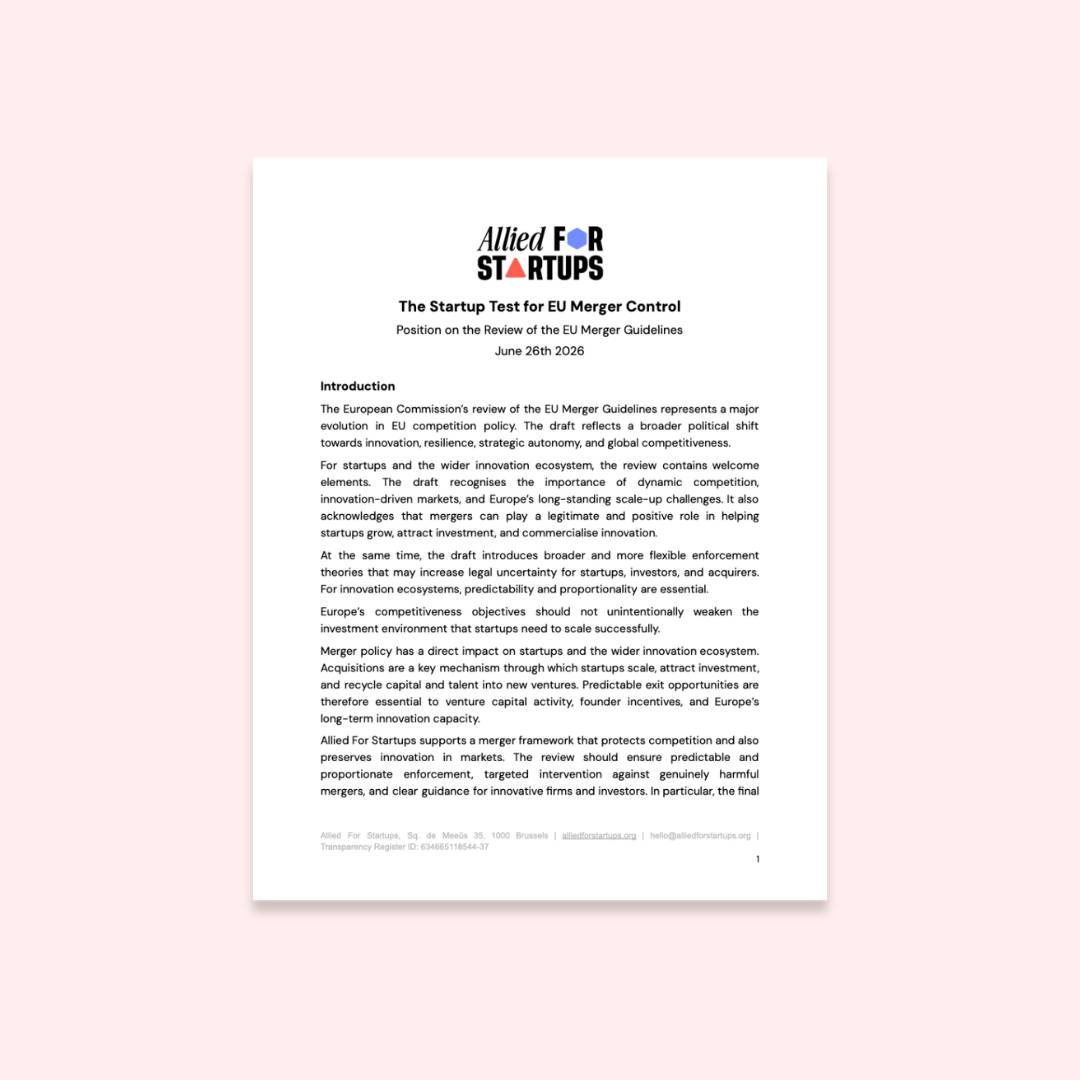
AFS’ Position on the Review of the EU Merger Guidelines
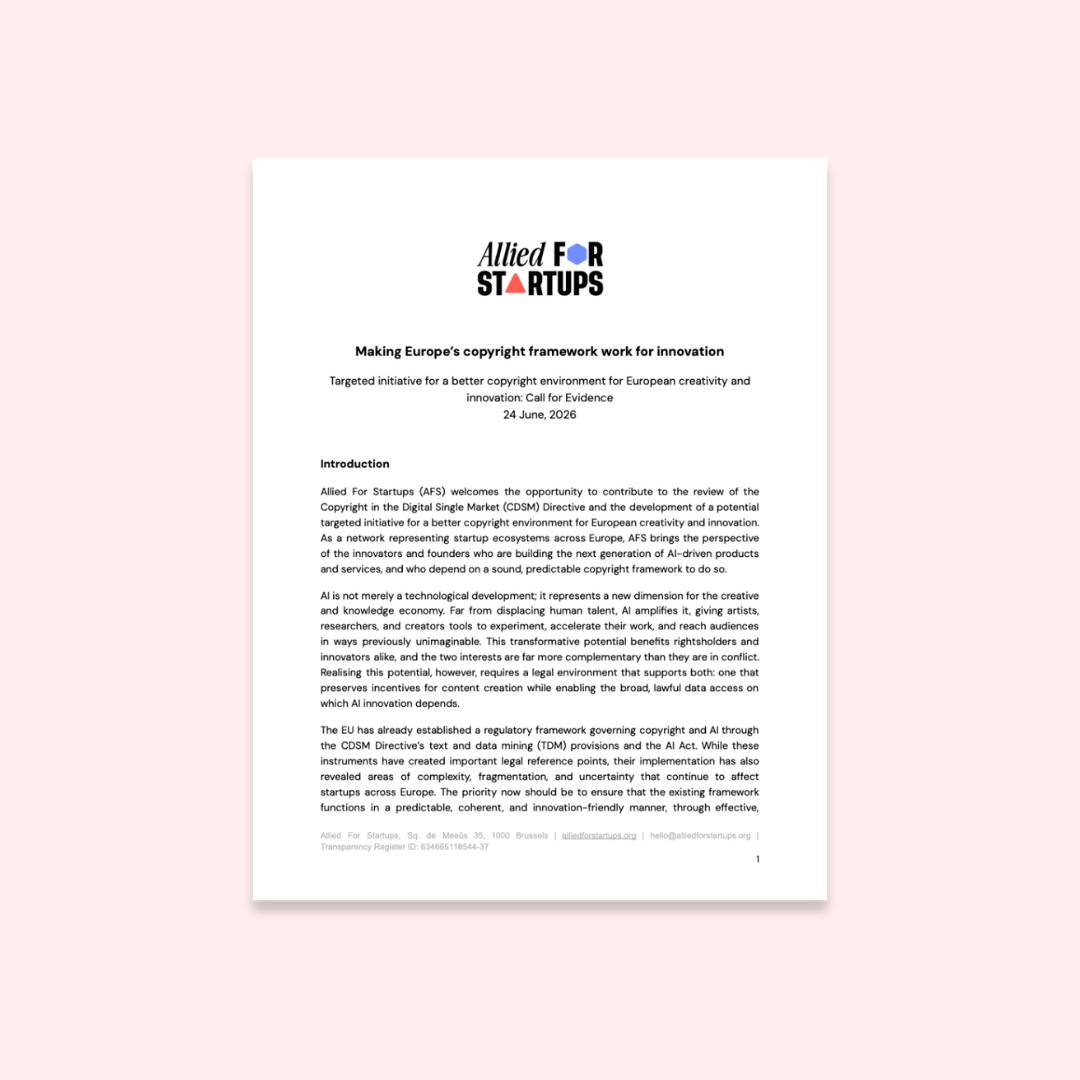
AFS’ Position on the Directive on Copyright in the Digital Single Market
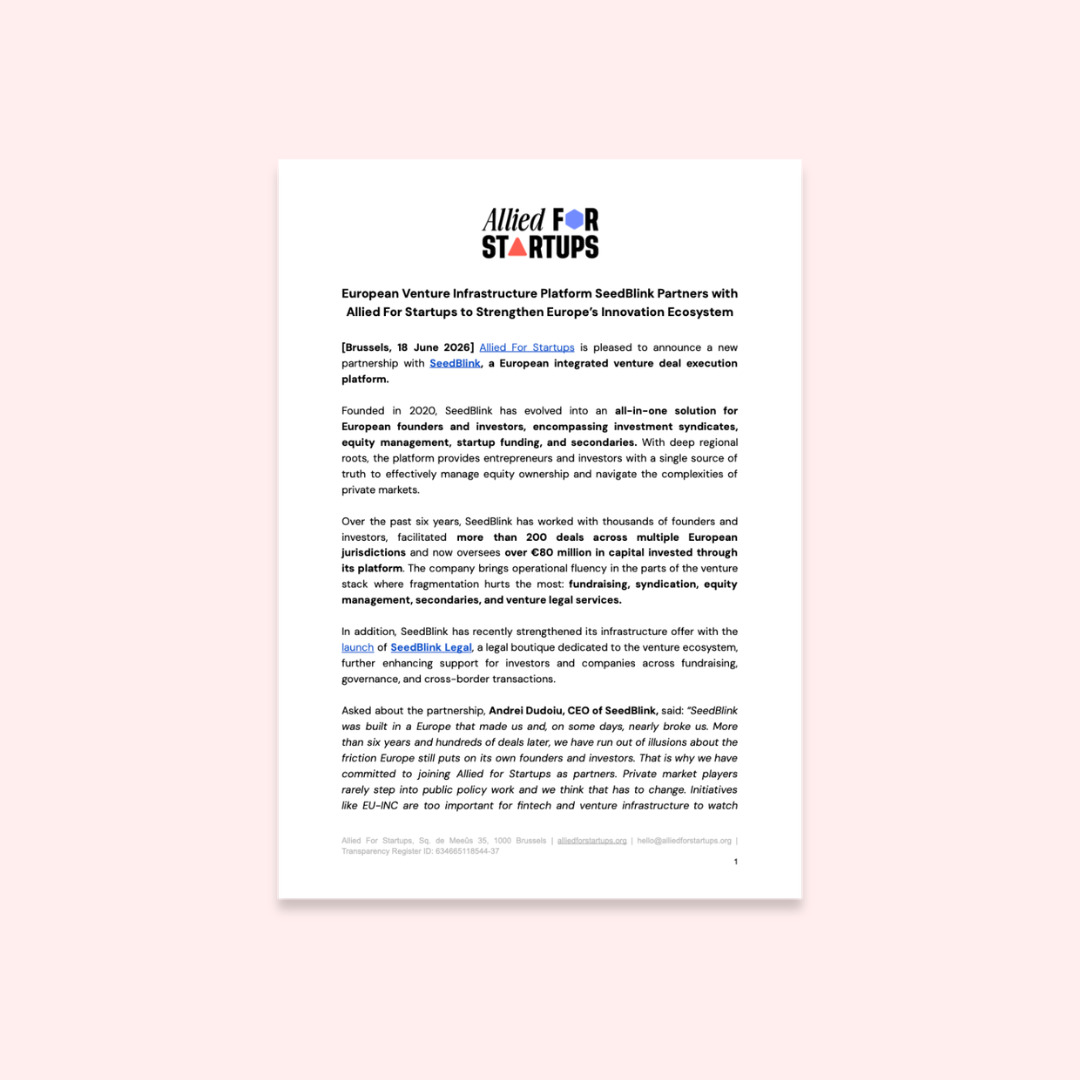
European Venture Infrastructure Platform SeedBlink Partners with Allied For Startups to Strengthen Europe’s Innovation Ecosystem
Startup Innovation
in Action
Join the conversation where policy meets innovation. Allied for Startups brings together entrepreneurs, policymakers, and industry leaders to tackle the biggest challenges and opportunities facing startups today.
Stay Informed
Stay Ahead
Discover how we change the game. Our news and publications offer an inside look at the policy work driving innovation and change in the startup ecosystem.